You finally got the tree down. The crew hauled the logs, the trunk is gone, and the yard looks like a construction site for about a week. Then the real question shows up: what happens next? Plenty of Ohio homeowners find sprouts poking out of the stump by midsummer, or a bare patch where the grass used to be. Most of that is avoidable with a little planning.
At Toledo Tree Removal Service, we work with homeowners all over the state, from river bottoms in the south to lake-effect yards up north. The soil changes a lot from one county to the next, but the basic steps for keeping things under control are the same. Here is what we tell customers when they ask how to make the removal stick.
Deal with the stump before anything else
The stump is the most common reason a removed tree keeps showing up. Even a dead stump can push out new shoots if the root system is still alive underneath. Maple, box elder, and silver maple are notorious for this, and so are many of the willows and poplars you see along Ohio creeks and property lines.
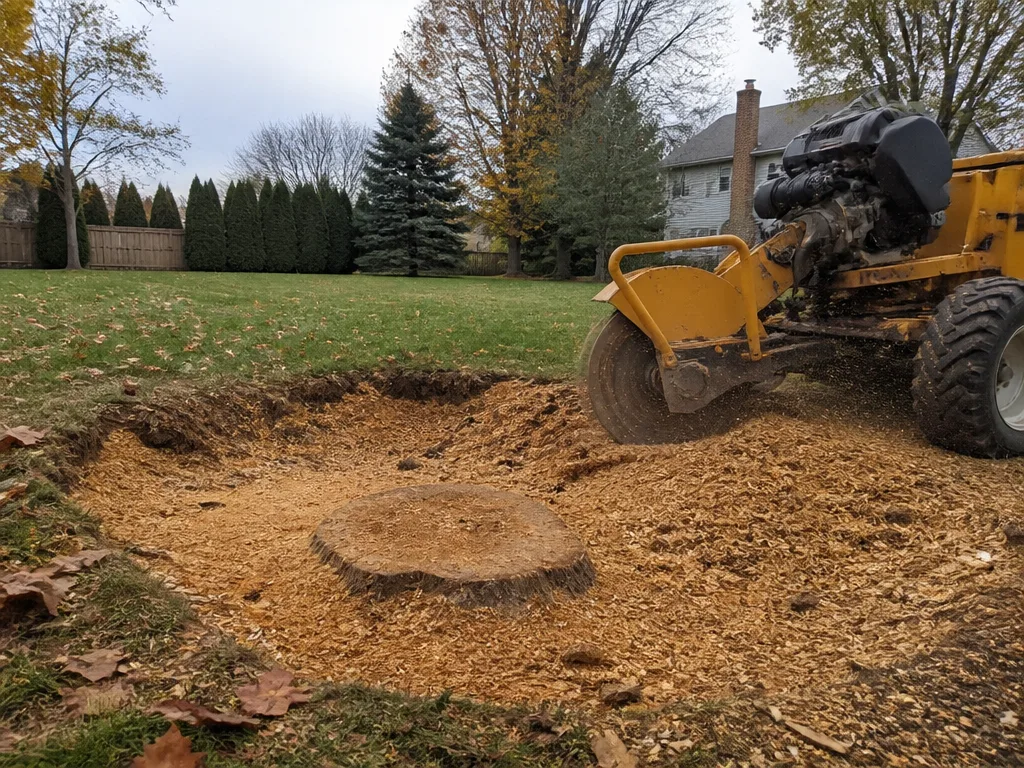
You have two real options. Stump grinding removes the wood down below the soil line, which is usually the cleanest fix. Full removal digs out the stump and the big roots. Either way, the goal is to cut off the living tissue that feeds new growth. Grinding leaves a pile of wood chips behind, so plan on either hauling them away or spreading them thin as mulch later.
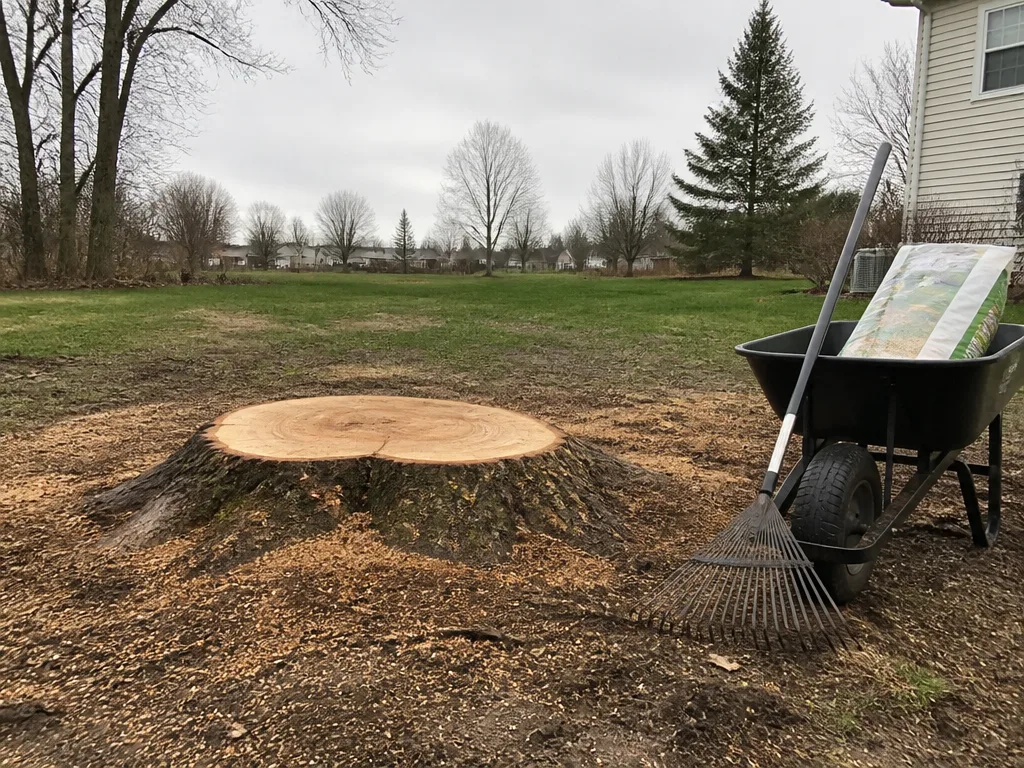
If you leave the stump alone for a season or two, expect suckers. These are the thin shoots that come up from roots and sometimes several feet from the original trunk. Pulling them by hand works on young growth, but it rarely finishes the job. Cutting them back repeatedly drains the root reserves, though, and that is where patience comes in.
Watch for regrowth in the first year
Think of the first twelve months as a monitoring window. Walk the yard once a week for the first month, then every couple of weeks through the first full growing season. Look for these signs:
- Shoots growing from the stump or the ground near the old roots
- Leaves that look different from your lawn grass, especially on cut edges
- Soft spots or sinking soil where roots are rotting underground
- Mushrooms or fungal growth on the stump, which often means decay is underway
Catching a sprout when it is two inches tall is far easier than dealing with a thumb-thick shoot next spring. Snap or cut new growth as soon as you see it, and do it when the plant is actively pushing energy up, usually late spring into early summer in most of Ohio.
Rebuild the soil and the lawn
A removed tree leaves the ground in rough shape. Heavy equipment compacts the soil, roots die and rot, and the shade that used to protect the grass is gone. Grass that thrived in the shade of an oak may struggle in full sun, and the patch right where the trunk stood often has very little topsoil left.
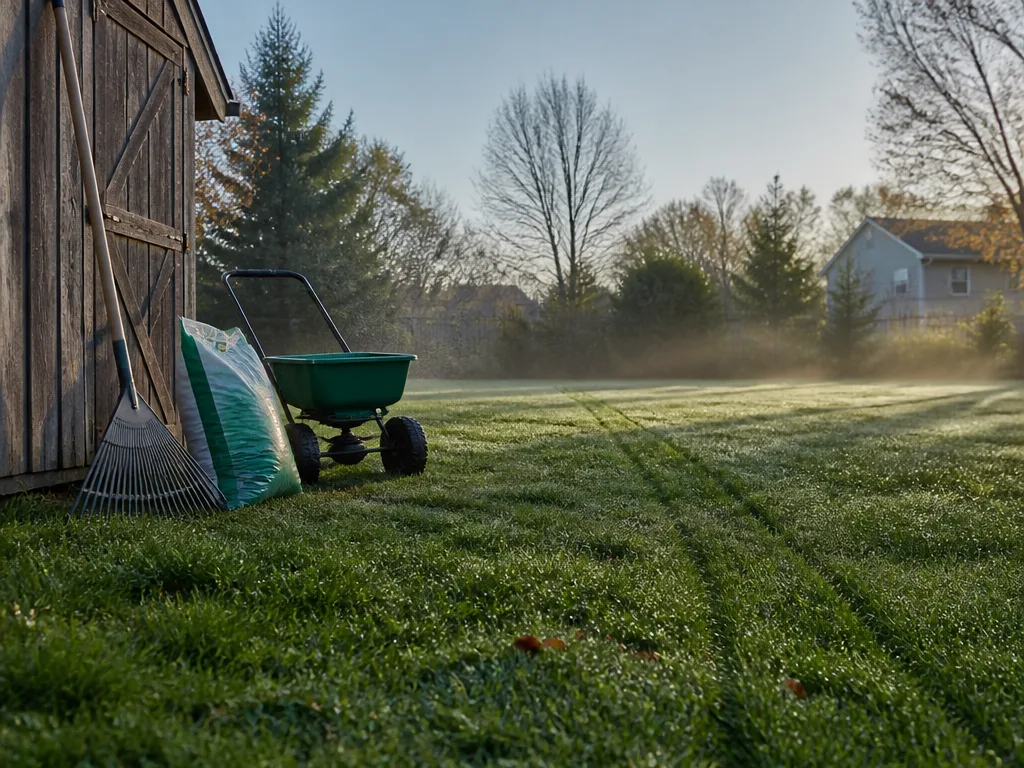
Start by loosening compacted areas with a rented aerator or a garden fork, especially along the path where trucks and chippers drove. Then add a few inches of quality topsoil over any low spots and grade the area so water runs away from the foundation. Rake the surface smooth before you seed.
For seeding, match the grass type to your sun exposure. Tall fescue blends handle Ohio summers well and do fine in partial shade. Shadier areas that used to be under a canopy may need a fine fescue mix. If you plant in early fall, you get the best germination window before winter. Spring seeding works too, but you will need to water more often through the first hot stretch.
Water the right way for new grass
New seed needs to stay damp, not soaked. Run the sprinkler for ten to fifteen minutes two or three times a day during the first two weeks, then taper back to a deeper soak a couple of times a week. Once the grass is established, water deeply and less often so roots grow down instead of staying near the surface. Most Ohio lawns do well with about an inch of water per week, counting rainfall.
Protect the spot you cleared
Once the stump is handled and the grass is coming in, the next job is keeping the bare ground from becoming an invitation for new problems. Mulch helps. A layer of two to three inches of shredded wood mulch around the former stump area holds moisture, keeps weeds down, and gives the soil a chance to recover. Keep the mulch a few inches away from any remaining trunk so the bark does not stay wet and soft.
Think about what you plant next. Skip the same species in the same spot for a while. Many homeowners replace a removed maple with another maple because that is what the yard was used to, but a different tree or a shrub bed gives the soil a break and reduces the chance of inherited root issues.
Also look at your neighbors. Seeds from a nearby tree can travel a surprising distance, especially with the wind off open fields. If a fast-growing species is growing along your fence line, consider removing those seedlings before they take hold.
When to call a lawn care specialist
Some situations are better left to someone who sees a lot of yards. If you notice regrowth after two full seasons, a stump that feels spongy, or grass that will not fill in despite steady watering, it is worth getting a second set of eyes on the property. Our lawn care specialists can look at the stump, the soil, and the root zone, then talk through what makes sense for your yard and your budget. Give us a call at your convenience and we will walk you through the next step over the phone.
Whether your place is in the Cleveland suburbs, the farm country around Findlay, or a rural lot down near the Ohio River, the steps are the same: deal with the stump, watch for sprouts, rebuild the soil, and choose your replacement plantings with care. Do those things, and the removal you paid for will stay removed.